
The problem with many brand films isn’t poor production, and it isn’t that the brand has nothing worth saying.
The visuals are beautiful, the music is moving, and the copy is perfectly correct:
“We have always insisted… We believe… We are there for every… We are committed to…”
Yet after watching, the audience still struggles to remember it.
Because the value a brand wants to express is not the same as the value users actually feel.
What a brand film really needs to solve is not “how to make the brand sound more touching”, but:
What does the brand have that is worth telling, and that can connect with users’ real lives?
This is the most important transformation a brand film has to make on its way from brief to creative.
For advertising professionals, the process can be broken into three stages:
- Brief recap: why make this film?
- Creative thinking: what should the brand promote, and why would users care?
- Creative articulation: how do you turn the relationship between brand and user into a good story?
STEP 1: Be clear about what this brand film is supposed to change
A brand film is not “film whatever the brand has”.
The same brand may have plenty worth expressing:
- Brand history;
- Product quality;
- The founder’s persistence;
- Users’ stories;
- Corporate social responsibility;
- The spiritual assets the brand has built over time.
But one film can’t explain all of these at once.
So before creative thinking begins, the first question is not:
“What do we want to film?”
But:
“Why does the client need this film now?”
Why does the client want this TVC?
The creative direction of a brand film often depends on the specific stage the brand is in.
For example:
- A new brand has just entered the market and needs basic awareness;
- A mature brand needs to re-explain its long-standing claim;
- A brand has a strong product advantage, but consumers don’t yet understand its value;
- A brand is familiar to consumers but lacks a fresh emotional connection;
- A brand wants to move from “the product gets bought” to “the brand gets embraced”.
All of these could be labeled “increasing brand influence”, but the creative directions are completely different.
If what the client really needs to solve is “consumers don’t understand the brand’s spirit”, and you go straight to an epic brand manifesto, the film may simply repeat what the brand has already said.
So the brief recap needs to dig further:
What new understanding of the brand should this film give consumers?
Not just making consumers “aware of the brand”, but helping them:
- Re-understand a claim the brand already makes;
- Discover that the brand’s value has something to do with them;
- Understand the meaning behind a product feature;
- Form a new emotional memory of the brand;
- Be willing to bring the brand into their own life experience.
Who is this film speaking to?
The audience of a brand film can’t just be written as “young consumers” or “target users” either.
You need to be clear:
Who should this film ultimately move, and to what response?
If it’s aimed at consumers, the focus may be the relationship between the brand and everyday life.
If it’s aimed at the industry, partners or an internal presentation, the focus may be brand positioning, business capability or long-term value.
The same brand story may also be told differently to different audiences.
So before getting into creative work, you must first be clear about who you’re talking to.
What is this film’s biggest challenge?
The most common challenge for a brand film isn’t “there’s no story”. It’s:
There’s still a layer of distance between how the brand already expresses itself and the life users can actually feel.
For example:
- The brand says “resilience”, but users only see an abstract adjective;
- The brand says “care”, but users only see a generic family reunion;
- The brand says “quality living”, but users don’t know what that quality actually changes;
- The brand says “technology makes life better”, but after watching, users still don’t see what it has to do with them.
So the brief recap should end with a more specific question:
What is the distance this film has to cross?
Is it from brand slogan to user experience, from product function to emotional value, or from a fact consumers already know to a meaning they hadn’t grasped before?
STEP 2: What should the brand actually promote?
Once the objective is clear, the next step isn’t to immediately find characters, music or a story.
It’s to answer:
Of all the brand’s information, what is truly worth promoting in this film?
This usually means looking at three things together: competitors, the brand’s own strengths, and user insight.
First, look at competitors: what is everyone saying?
Competitor analysis isn’t simply listing:
- Brand A talks about quality;
- Brand B talks about youth;
- Brand C talks about companionship;
- Brand D talks about dreams.
This kind of analysis only tells you which words everyone used. It doesn’t help you find a creative direction.
Truly valuable competitor analysis looks at:
Through what specific means do competitors get consumers to understand their brand value?
For example, all talking about “durability”:
- Some brands show the product surviving extreme environments;
- Some emphasize materials and craftsmanship;
- Some prove quality through years of use;
- Some turn “durability” into a relationship of being by the user’s side through life.
They may be promoting the same product fact, but the brand meaning they express is different.
So what competitor analysis is really looking for is:
Which angles have competitors already claimed? What do we have that hasn’t been fully told yet?
Then look at the brand: what is its real advantage?
A brand’s advantage can’t stop at product specs or a brand slogan.
For example:
- Durable;
- Soft;
- Smart;
- Safe;
- Convenient;
- Has heritage;
- Has technology;
- Has service.
These may all be real advantages, but they aren’t creative ideas yet.
Creative work has to keep asking:
What does this advantage actually mean in the user’s life?
For example, “durable” might mean:
- The product holds up to use;
- It doesn’t need replacing often;
- It can go through a long stretch of life with the user;
- Signs of wear don’t lower its value;
- The product gradually becomes the user’s own.
Each of these interpretations leads to a completely different brand story.
So a brand advantage needs to go through one transformation:
Product fact → User experience → Meaning to the user → Brand expression
Case 1: Timberland’s “Tī Bù Làn” stories (from the brand’s Chinese nickname, roughly “the boots you can’t kick apart”): turning the marks of use into a relationship between brand and person
What’s truly worth learning from it is not “they found real people”, nor simply “using personal stories to express the brand spirit”.
It’s that it found a very specific point of connection:
The marks left on a pair of worn boots can become a record of someone’s life.
Timberland already owned the “can’t kick them apart” brand asset. But if it made another film telling consumers:
our boots are tough, our brand is resilient, consumers would still only receive a one-sided brand declaration.
What the “Tī Bù Làn” stories did was push the question further: if a pair of boots really walked a long way with someone, what would they leave behind?
Different people’s boots carry different scuffs, creases and marks, and those marks seem to record the roads each of them has walked. The brand then carries these personal experiences back to the boots themselves, making each pair a unique object that belongs to that person. Case materials also emphasize this link between people’s experiences and Timberland’s yellow boots. So the creative chain becomes very clear:
A person’s experiences → Marks on the boots → Boots that belong to this person → The brand meaning of “can’t kick them apart”
It doesn’t leave the product outside the story. On the contrary, the product itself is the evidence that makes the story true.
So what the brand really promotes is no longer just:
“The boots are durable.”
But:
“The more marks a pair of boots carries, the more it shows they’ve become part of your life.”
That is the difference between it and an ordinary ad for a durable product.
What it means for brand TVC planning
When we ask in STEP 2:
What is our brand’s advantage over competitors?
We can’t stop at “durable”.
We have to keep asking:
Can this advantage leave something perceptible on the user?
If the answer is yes, the creative has a chance to move from product fact to brand story.
User insight: don’t just look for “what pain points users have”
User insight for a brand film can’t stop at:
- Users are busy;
- Users are tired;
- Users are under a lot of pressure;
- Users need companionship;
- Users pursue a quality life.
These judgments may all be true, but they aren’t enough to generate a creative idea directly.
A genuinely useful insight needs one more question:
Why would users care about this?
For example:
“Users don’t sleep well” is just a surface phenomenon.
A deeper layer might be:
- Users know sleep matters, but always feel there’s something left undone;
- It’s not that users don’t want to rest; it’s that they find it hard to let themselves stop;
- What users need isn’t more knowledge about sleep, but a reason to rest with peace of mind.
Only then does the brand have a chance to find a real direction for expression.
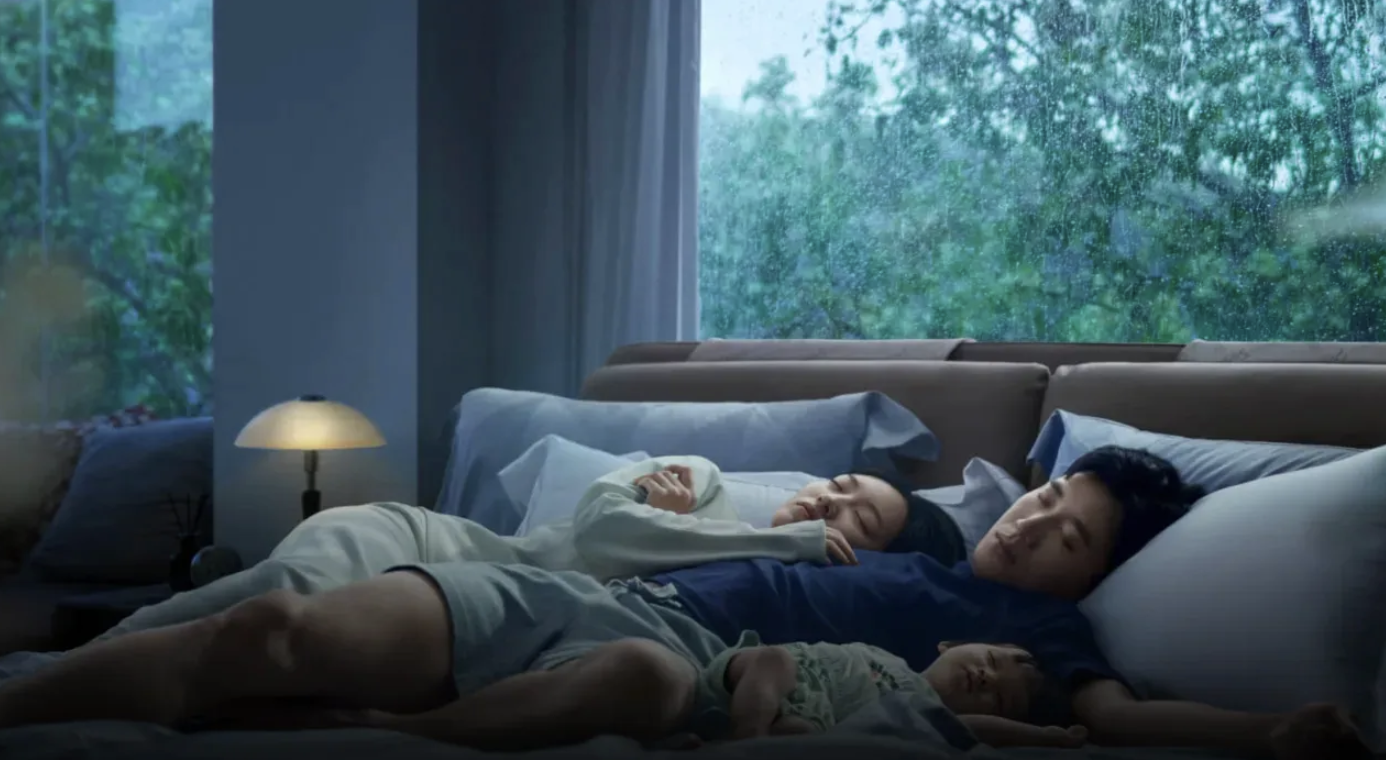
Case 2: De Rucci, Rain Sleep: not telling people “sleep matters”, but giving them back a reason to rest
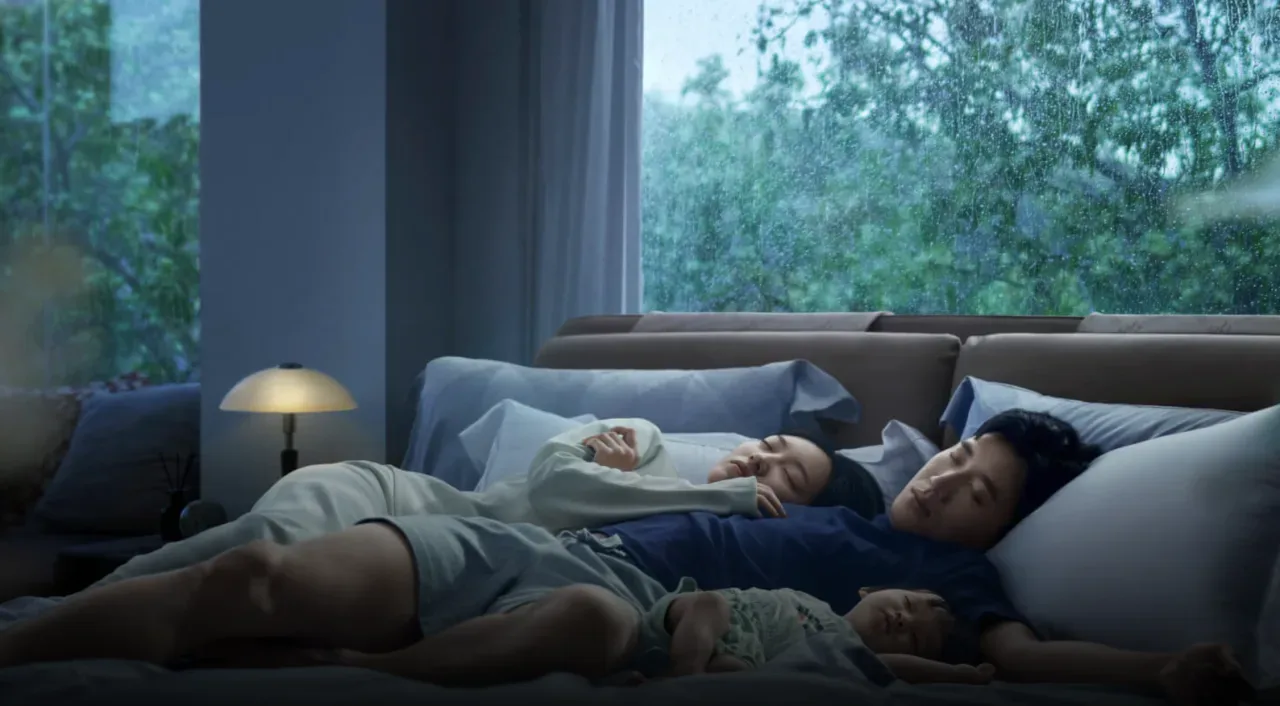
De Rucci’s Good Rain for Good Sleep builds its idea around rainy days, listening to the rain and falling asleep. Rather than focusing on traditional sleep education, the film uses the everyday situation of a rainy day to let people feel again that rest is natural and justified.
https://www.xinpianchang.com/a12634602
What’s really worth unpacking in this film is not:
“Rain scenes are soothing.”
But:
Instead of reminding users yet again that they must sleep well, it finds them a reason to stop for a while.
From “can’t sleep well” to “finally allowed to stop”
If a mattress ad said directly:
Sleep is important. Poor sleep affects your health. So you need better sleep.
The logic is fine, but that’s common sense, not insight. Insight is what users don’t say out loud: the things, moods and feelings they keep to themselves.
So Rain Sleep chose a different direction.
The rain comes.
Things that had to be finished can be set aside for now.
The leaves that haven’t been swept can wait.
The person you were waiting for, you can stop waiting for.
Many things don’t all need to be done today.
So here, rain isn’t just a natural scene.
It actually becomes a kind of:
life permission that says “you can stop now”.
Why is this insight more creatively valuable than “modern people don’t get enough sleep”?
“Modern people don’t get enough sleep” is a general fact. But it can’t directly decide how the story is told.
Rain Sleep found a more specific psychological relationship:
Many people know sleep matters. What they struggle to find is a moment when they can stop without feeling guilty.
This turns rain from a natural scene into a kind of “permission to live”.
It makes people feel:
- Today can run a little late;
- Unfinished things can be put down for now;
- You don’t have to be efficient every moment;
- Rest doesn’t require proof that you’ve earned it.
From user insight to solution
The creative chain of this film can be broken down as:
Surface need: wanting to sleep well
↓
Deeper need: wanting to stop with peace of mind
↓
Solution: give rest a natural reason
↓
Story: the rain comes, and everything can pause for a while
The most important point here is:
The solution doesn’t have to be a product feature. It can also be a new emotional interpretation that the brand offers.
When a brand can resolve the user’s psychological question of “why am I allowed to stop”, the relationship between the brand and the user has already been built.
STEP 3: Turn the insight into a story
Only once the brand objective, differentiation and user insight are all clear do you truly get to creative articulation.
This stage isn’t simply “write a story”.
It requires three transformations:
Insight → Story → Emotion
First, turn the insight into a concrete story premise
A good story premise should be able to answer:
If this insight is true, what happens in real life?
For example:
- If a pair of boots really records someone’s experiences, what marks would be left on them?
- If a rainy day really allows people to stop, what happens to the things they normally can’t stop doing?
- If the brand’s value really relates to users, in what specific moment would they feel it?
- If someone really wants a certain food, how far would they go for it?
The purpose of this step is to turn an abstract insight into a real-life situation that can be filmed.
Case 3: KFC, Beyond the Sea: making the product benefit the reason the story happens
KFC South Africa’s 2024 film Beyond the Sea follows two researchers stationed on remote Marion Island. Because the nearest KFC is more than 2,000 kilometers away, they decide to cross the Southern Ocean in an inflatable boat just to eat KFC. The film was created by Ogilvy South Africa.
https://thecreativesroom.com/ref/kfc-beyond-the-sea-by-kim-geldenhuys
The most valuable lesson from this film isn’t:
“Shoot a food ad as an adventure movie.”
But:
It turns an ordinary product craving into the only reason the story happens.
It doesn’t start from “the fried chicken tastes great”
An ordinary food ad usually shows directly:
- A crispy coating;
- Juicy meat;
- A mouthwatering aroma;
- Someone eating happily.
These prove the product tastes good, but they rarely make a distinctive story.
Beyond the Sea first asks a question:
If someone really wants KFC, how far would they actually go?
And so:
Craving → Too far away → Decide to set out → The adventure keeps escalating → Finally get to eat
The product benefit is no longer a selling point to be described. It becomes an action to be watched.
It turns “liking” into visible behavior
“Consumers like KFC” is an ordinary statement.
But:
Willing to cross more than two thousand kilometers just to eat KFC.
That becomes dramatic behavior.
This step turns the product benefit from a rational description into an extreme situation you can watch:
Ordinary craving → Extreme action → Absurd conflict → The product is remembered
The audience is first drawn in by the behavior, then gradually realizes:
They just really, really wanted KFC.
It doesn’t leave the product outside the story
Although the film is shot as an ocean adventure, the story never goes off track.
Swap KFC for an ordinary brand and the adventure loses its reason to exist.
Because the characters don’t set out to complete a challenge.
Instead:
It’s getting to eat KFC that makes the challenge worth it.
So its creative chain isn’t:
Antarctic adventure → Brand appearance.
But:
Craving KFC → Too far away → Setting out to get it → The adventure keeps escalating → Finally eating KFC.
The brand benefit isn’t explained by a voice-over. It’s proven by the characters’ actions.
What it means for brand TVC planning
When turning insight into story in STEP 3, don’t just ask:
How can we make the product’s selling points more fun to watch?
Ask instead:
If this product benefit is real, what specific behavior would users show?
For example:
- If the product is really convenient, what time would users save because of it?
- If the product is really durable, what experiences would it accompany users through?
- If the product really tastes great, what irrational thing would users do for it?
- If the product really solves a problem, what trouble would users avoid?
A good product story doesn’t put the selling point into the story. It makes the selling point the reason the story happens.
Making a story more moving isn’t about adding emotion, but adding “relationship”
To move people, many brand films keep adding:
- Sadder music;
- More touching voice-overs;
- Bigger set pieces;
- More heart-wrenching life stories;
- Stronger emotional twists.
But more emotion doesn’t make a story more moving.
What actually stirs the audience is often:
The audience sees a relationship they can understand.
In the Timberland stories, what moves people isn’t some grand life lesson the characters tell, but the audience seeing that:
the marks on a pair of boots really can be tied to someone’s life.
In Rain Sleep, what moves people isn’t the rain itself, but the sudden realization:
I haven’t let myself rest without guilt in a long time.
KFC’s Beyond the Sea makes the audience understand:
an ordinary product craving can be strong enough to drive someone to something this absurd.
So the emotion in a story shouldn’t just be “touching”.
It should give people a specific feeling:
- “That’s me.”
- “I’ve had moments like that too.”
- “So this is another way to see it.”
- “So this brand isn’t just saying empty words.”
That is where the real emotion of a brand story comes from.
Making a story clearer: brand value must be brought back into the story
A brand film can’t be all story and no brand.
But the brand also can’t just be a logo at the end.
A good brand story lets the audience understand, after watching:
Why does this story have to be told by this brand?
In the Timberland stories, the marks on the boots ultimately lead back to Timberland’s brand asset.
In Rain Sleep, the rainy day that lets people stop ultimately leads back to De Rucci’s relationship with sleep and rest.
In KFC’s Beyond the Sea, the whole point of the adventure is to eat KFC, so the product craving is part of the story from the start rather than dropped into the ad at the end.
They don’t:
tell a story first and force the product in at the end.
Instead:
the story itself explains why the brand deserves to be chosen.
So creative articulation has to close the loop:
User insight → Story situation → Emotional change → Brand meaning
If, in the end, all you can say is:
“This story is moving, so it suits our brand.”
then the relationship between the brand and the story hasn’t been built yet.
The question you should really answer is:
Why does this story only work when we tell it?
The three most common mistakes in brand films
1. Filming the brand slogan directly as a story
The brand says “resilience”, so you film someone overcoming hardship.
The brand says “companionship”, so you film a family reunion.
The brand says “dreams”, so you film someone working hard and succeeding.
There’s nothing wrong with these stories.
The problem is:
they usually only prove that the value exists, not why the value belongs to this brand.
2. Making the user’s pain look even worse
Users don’t sleep well, so you film insomnia.
Users are busy, so you film overtime.
Users are stressed, so you film a breakdown.
But a brand film doesn’t have to keep amplifying users’ pain.
Sometimes a more effective approach is:
finding an angle that helps users see that pain in a new way.
Rain Sleep does exactly that.
Instead of emphasizing “you don’t sleep well”, it tells users:
You don’t have to keep rushing for now.
3. Sacrificing the brand–story relationship for emotional impact
If a story is moving but would work just as well for any other brand, it’s more like an ordinary emotional short film than a brand film.
What a brand story really needs isn’t “how touching it is”, but:
whether the brand’s value has become an irreplaceable part of the story.
From brief to brand story: a complete TVC planning process
Reorganizing the thinking above gives a fairly clear creative path.
STEP 1 | Brief recap
First, be clear about:
- Why does the client need this film now?
- What goal should it ultimately achieve?
- Who is this film speaking to?
- What is this film’s biggest challenge?
STEP 2 | Creative thinking
Then answer:
- What do competitors’ TVCs say?
- What is the brand’s real advantage over competitors?
- What should the brand promote?
- Who is the user?
- What is the real user insight?
- Based on that insight, what solution can the brand offer?
STEP 3 | Creative articulation
Finally:
- Turn the insight into a story;
- Give the story a real emotional relationship;
- Make the story’s expression clearer;
- Bring the brand naturally back into the story;
- Make sure it holds up why this brand is the one telling the story.
But in real TVC work, knowing these questions isn’t the hard part
What’s really hard is:
when the brief, competitor materials, brand information, user information and creative ideas are all piled up in front of you, how do you actually organize them?
This is also where many TVC proposals take the most time.
You may already have:
- A client brief;
- A pile of brand materials;
- A few competitor cases;
- Some user information;
- A few scattered creative sketches;
- Maybe even a few directions already written.
But between all this information and a TVC proposal you can actually present, there’s still a lot of thinking and organizing to do.
That is the problem Pufuf’s brand TVC planning SOP sets out to solve.
Use Pufuf to really run through the creative thinking for a brand TVC
Pufuf isn’t a simple “AI writes your copy” tool.
It’s closer to a workspace that organizes information and creative thinking according to the logic of advertising planning.
In Pufuf, brand TVC planning follows a complete SOP:
STEP 1 | Brief recap
↓
STEP 2 | Creative thinking
↓
STEP 3 | Creative articulation
You can put the project background, client needs, competitor information, user information and your own thinking into the corresponding content nodes.
Then let Pufuf keep organizing and analyzing based on that information.
The point isn’t:
“AI writes an ad proposal for you.”
But:
“Organizing the planning thinking that advertising professionals should be doing anyway, according to a clear TVC SOP.”
From scattered information to a complete creative logic
For example, you might start out with only this:
The client wants the brand to be seen as younger. Competitors all talk about technology. Our product is actually easier to use. Users feel all products are pretty much the same now. They want an emotional TVC.
Each of these points is fine on its own.
But together they aren’t a creative idea yet.
Pufuf’s TVC SOP breaks the problem down further:
Why make it?
→ What communication problem does the brand need to solve right now?
What do competitors say?
→ What expressions has the market already formed?
How are we different?
→ What differentiated space can the brand truly own?
Why do users care?
→ What lies behind the surface need?
How should we solve it?
→ What new understanding can the brand give users?
How do we tell it in the end?
→ What story can this insight become?
Only then does information scattered across different materials start to form a complete creative logic.
What Pufuf really wants to save advertising professionals isn’t just “proposal-writing time”
The most time-consuming part of a TVC proposal is often not the typing.
It’s the constant back and forth:
Research → Check competitors → Sort out the brief → Look for insight → Think of directions → Scrap them → Reorganize → Write the proposal → Find the logic doesn’t hold → Start over.
Pufuf’s value is turning this thinking process into a structure you can keep building on, organizing and moving forward.
You can still think for yourself.
You can still revise.
You can still scrap things.
You can even keep the parts you haven’t figured out yet.
But you don’t have to start from a blank page every time.
For advertising professionals, this means:
AI no longer just helps you make a sentence prettier. It helps you turn “what I’m thinking” step by step into “what I can present”.
In the end, a good brand film isn’t “written”
It usually goes through a path like this:
Why the client needs it
↓
What the brand really has
↓
What competitors already say
↓
What users really need
↓
What new solution the brand can offer
↓
What story this insight can become
↓
Why the story has to be told by this brand
↓
A brand expression that can finally travel
Timberland found the relationship between the marks on a product and the experiences of a life.
De Rucci found the relationship between rest and “allowing yourself to stop”.
KFC found the relationship between product craving and extreme action.
They didn’t simply “tell a good story”.
They first found:
the relationship between brand and user that is truly worth telling.
That is the hardest and most valuable part of a brand film.
And what advertising professionals really need isn’t just “an AI that writes copy”.
It’s a planning method that helps them move step by step from Brief → Objective → Competitors → Insight → Solution → Idea → Story.
That is exactly the problem Pufuf’s brand TVC planning SOP is built to solve.
Let creative work start from a pile of information, not from a blank page.