
Some ideas aren’t thought up. Life delivers them.
The creative industry is going through an unusual round of staffing changes.
In 2025, headcount at UK creative agencies fell by more than 14%, to 12,659 people. It was the largest annual decline since the IPA (Institute of Practitioners in Advertising) began tracking creative and media agency staff separately in 2004.
Among them, staff aged 25 and under fell by 19.2%. Meanwhile, 24% of agencies surveyed expect to cut jobs as a direct result of AI in 2026, three times the share of the year before.
At the level of global advertising groups, the adjustments continue. WPP has cut around 11,000 roles since the start of 2025, and reports say the group plans to cut up to another 1,000 by the end of 2026.
Of course, not all of these changes are caused directly by AI. Restructuring, shifting client budgets, mergers and cost control are all pushing the industry to reorganize. But the change in productivity brought by AI has become a factor that can’t be ignored.
For creative workers, the signal behind these numbers isn’t hard to read:
Research, analysis, copywriting and creative work that used to take a team are being redefined by ever more powerful AI tools.
Companies are recalculating how many people it takes to do the same work, and young practitioners are facing fewer ways into the industry.
And so an increasingly real question confronts creatives:
When AI can already analyze markets, derive insights and generate ideas,
and even proactively search for potential leads, where does a creative’s value lie? Where do our ideas come from?
Luckin Coffee’s Luckin Big Sesame Cake offers a starting point worth revisiting.
Its creative starting point was not a conventional brand brief.
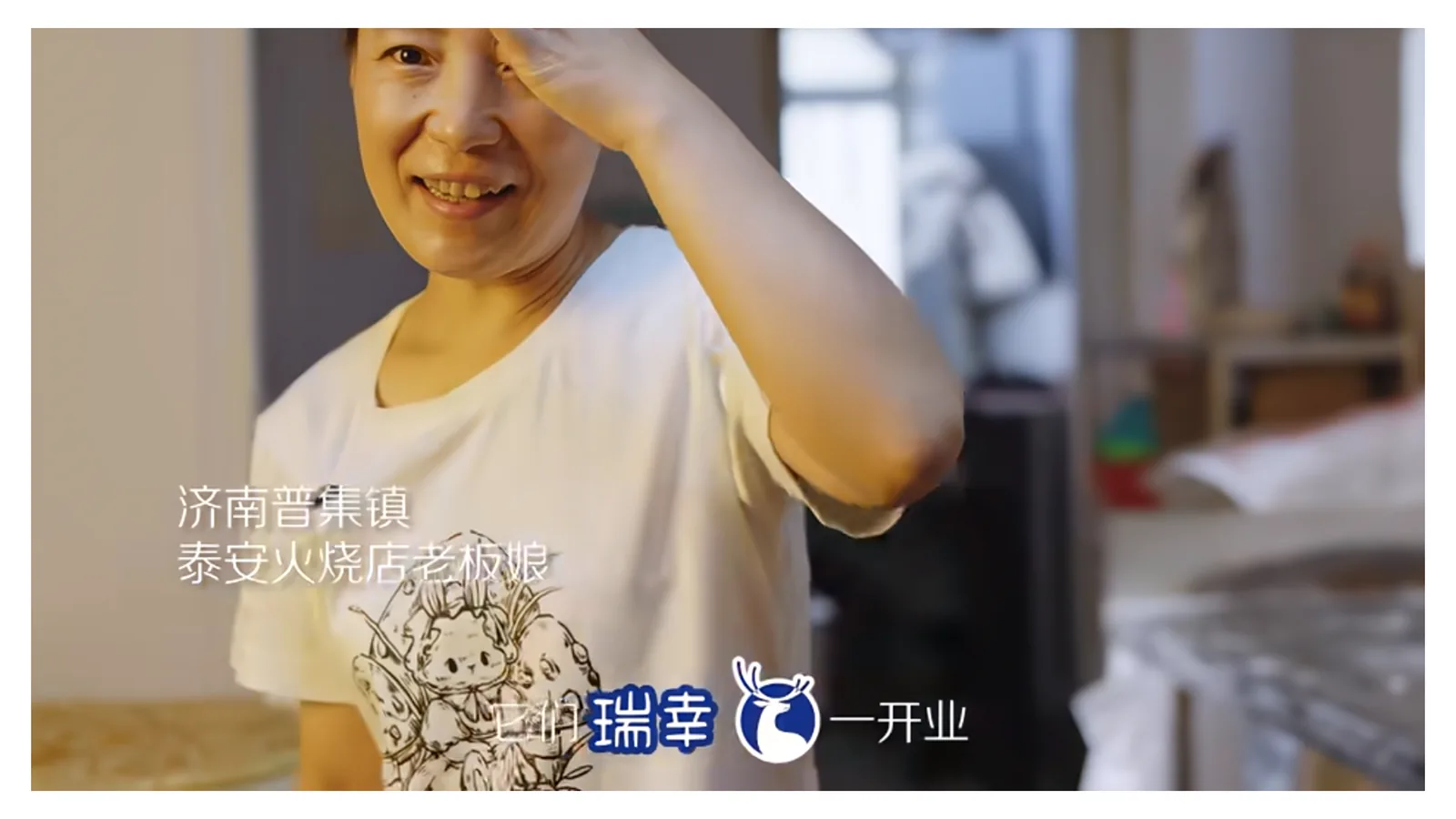
A planner scrolling Douyin came across a video of the woman who runs a sesame-cake (shaobing) shop. In it, she joked that ever since Luckin opened next door, her own business had picked up too.
It was just an ordinary slice-of-life post.
But this planner noticed it. Instead of scrolling past it as a funny clip, he decided to go and see for himself, to understand how this unexpected neighborly relationship had come about.
Only then did Luckin Big Sesame Cake come into being.
Judged by results, it was a successful piece of brand communication. But trace it back to its origin and you notice something interesting:
The first creative lead came not from brand strategy, nor from market analysis, but from a chance encounter with a piece of information.
A shop owner made an offhand joke, a planner happened to see the video, and happened to be curious about it.
A small thing that had nothing to do with advertising entered the creative field of view, just like that.
It was one of life’s coincidences.
And today, as AI gets better and better at producing ideas, coincidences like this may be worth a fresh look.
01. AI can derive ideas, but it can’t discover life
Advertising creative used to follow a fairly clear workflow:
Receive the brief, research the market, analyze the user, look for insight, then derive a creative direction from it.
This way of working is being profoundly changed by AI.
Today’s AI can already do much of the upfront research: compiling industry materials, analyzing competitors, summarizing user pain points, spotting consumer trends, even identifying latent needs in complex information.
It can go further and propose creative directions, compare the potential reach of different options, and keep revising to fit the brand’s tone and the client’s requirements.
This isn’t a distant vision. It’s a change already happening in many creatives’ daily work.
Forget ChatGPT and Claude for a moment. Take a new tool I’ve been using lately, called Pufuf (拍脑袋, literally “slap your forehead”):
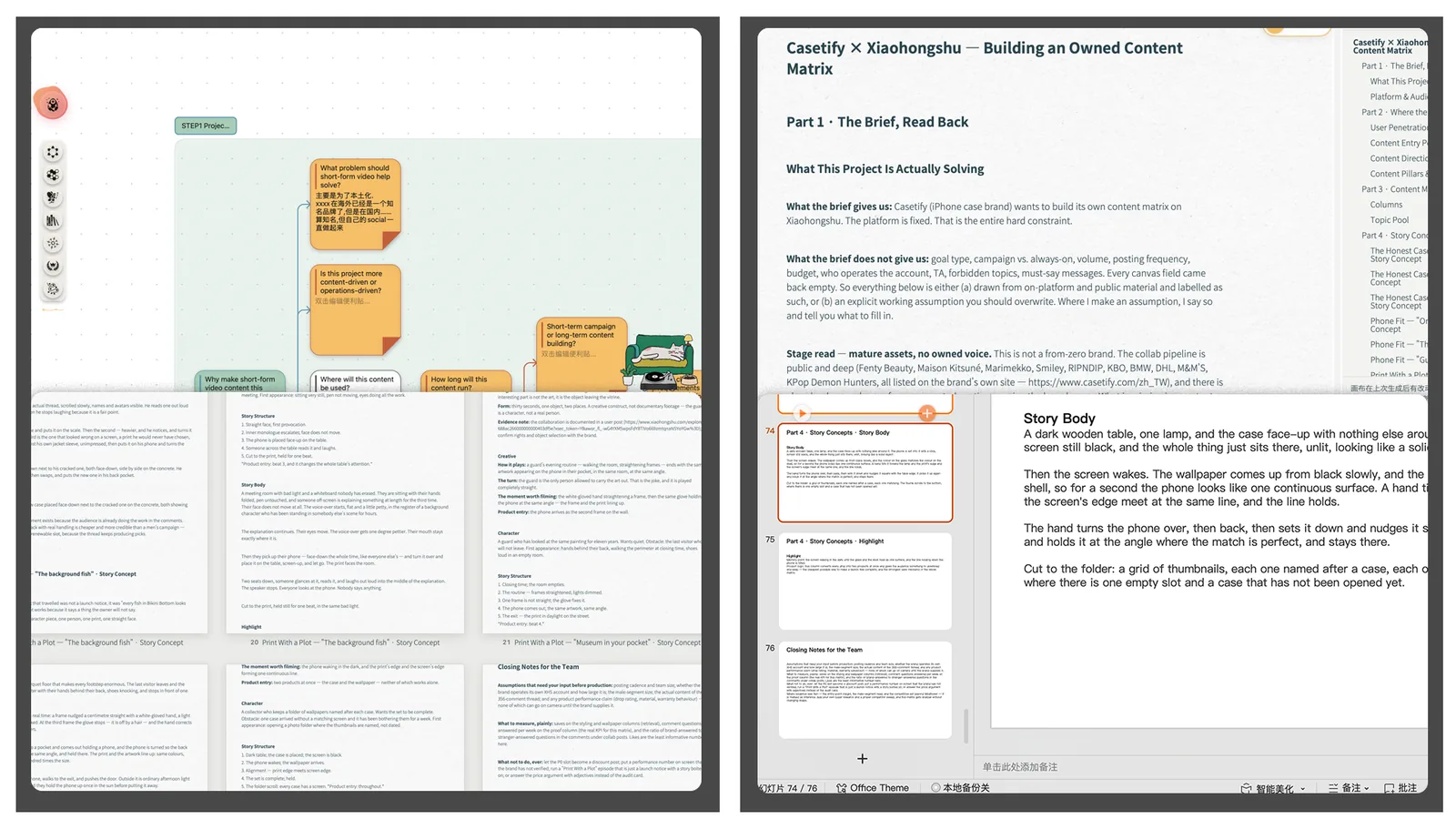
It takes what I’ve written on the nodes of my canvas as a reference, goes off to research and analyze, and finally generates a complete proposal.
Each project type also comes with preset agency-grade questions on its nodes. For some project types I’d never worked on before, I could just follow the questions on the nodes and write.
See? Work that used to take several people and rounds of discussion can now be done with AI in far less time.
Both the barrier to and the efficiency of creative production are changing.
Let’s not debate whether Luckin Big Sesame Cake was a good campaign or why it worked. What a case like it shows is a different creative path:
It didn’t start with a clear marketing problem and then look for the answer through analysis.
Instead, something small happened in everyday life first, and only afterwards did someone realize: this might be worth telling.
The starting point of an idea is sometimes not a problem to be solved, but a story that turns up unexpectedly and is worth asking about.
It also means that creativity doesn’t always happen inside the brief.
02. Stories that never belonged to advertising
Similar creative paths can be found in a number of overseas cases worth studying.
What they have in common isn’t a similar creative format. It’s that the brand starts from people, relationships or events that already exist in reality, and gives content that never belonged to advertising a new meaning in communication.
Green Giant: a misdirected text that became a ten-year friendship
In 2015, an American grandmother named Wanda Dench meant to send a Thanksgiving dinner invitation to her family, but accidentally texted a stranger, Jamal Hinton.
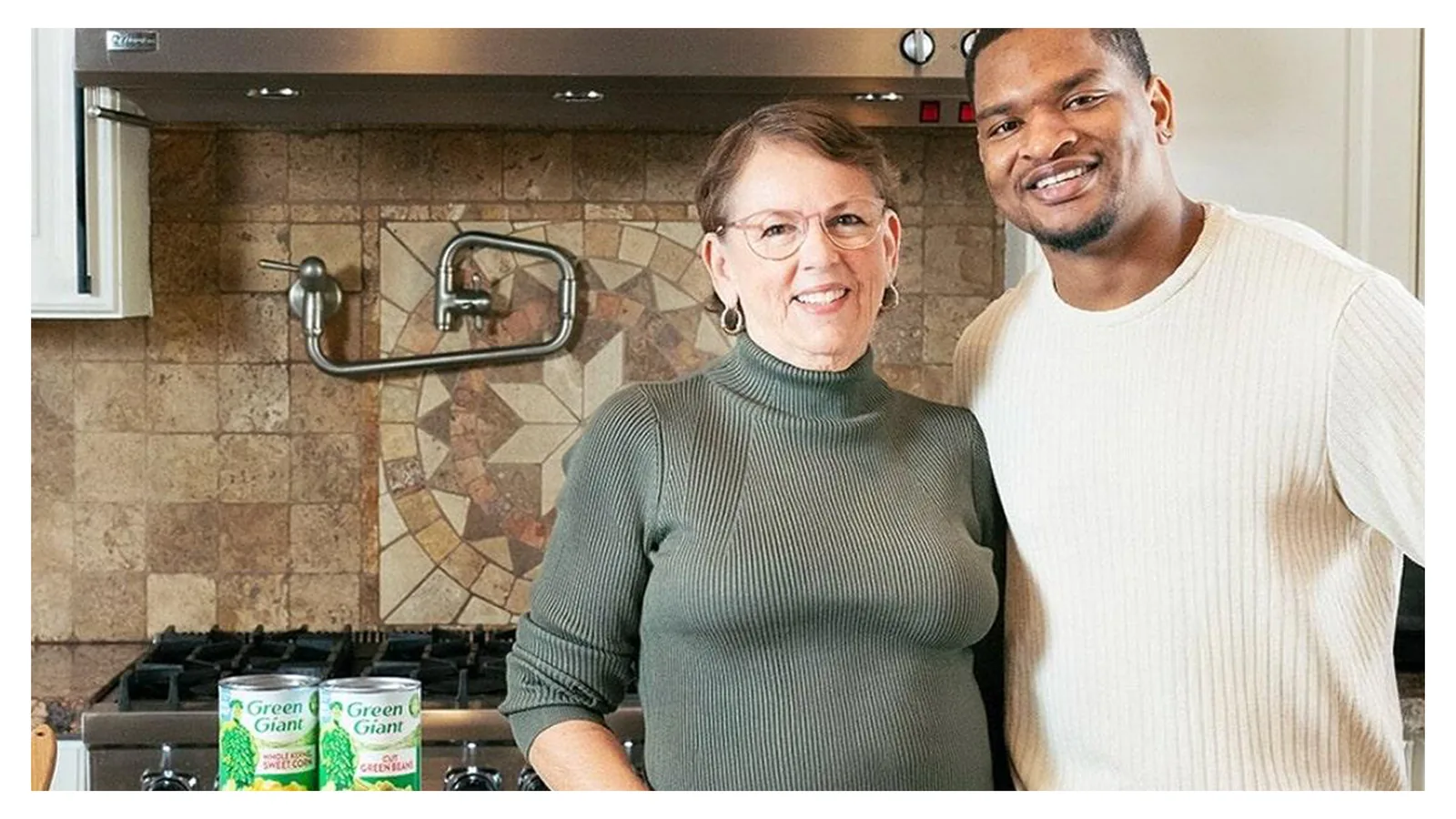
Jamal realized the message might have been sent to the wrong person and replied with a selfie to check. That’s how the two met.
The misdirected text didn’t end as a passing internet curiosity.
The two really did spend Thanksgiving together and gradually became friends. Their chance meeting kept drawing attention online, and their Thanksgiving tradition carried on for years.
In 2025, food brand Green Giant invited the two to celebrate the tenth anniversary of their friendship.
Rather than inventing a heartwarming story about family reunions out of thin air, the brand joined a relationship that had already existed for ten years.
A misdirected text was originally just a small accident in life. Ten years later, it became real material for a brand to talk about human connection.
Its value doesn’t lie in how cleverly a creative team designed the plot, but in how “unexpected” the relationship itself is.
JCDecaux: making a 100-year-old grandmother the center of a city’s attention
In 2023, Spanish outdoor advertising company JCDecaux worked with creative agency DAVID Madrid on a special metro campaign: Meet Marina Prieto.
Marina Prieto is a centenarian from Galicia, Spain. She shares her life on Instagram: everyday moments with family, birthdays and other ordinary snapshots.
At the time, her Instagram account had just 28 followers.
The creative team found her account and felt these plain, genuine records of life deserved to be seen by more people.
So Marina’s everyday photos were blown up and placed across more than 800 ad spaces in the Madrid metro.
No elaborate brand story, no carefully packaged influencer persona. Passengers simply saw real moments from a stranger’s life, and one simple question: who is she?
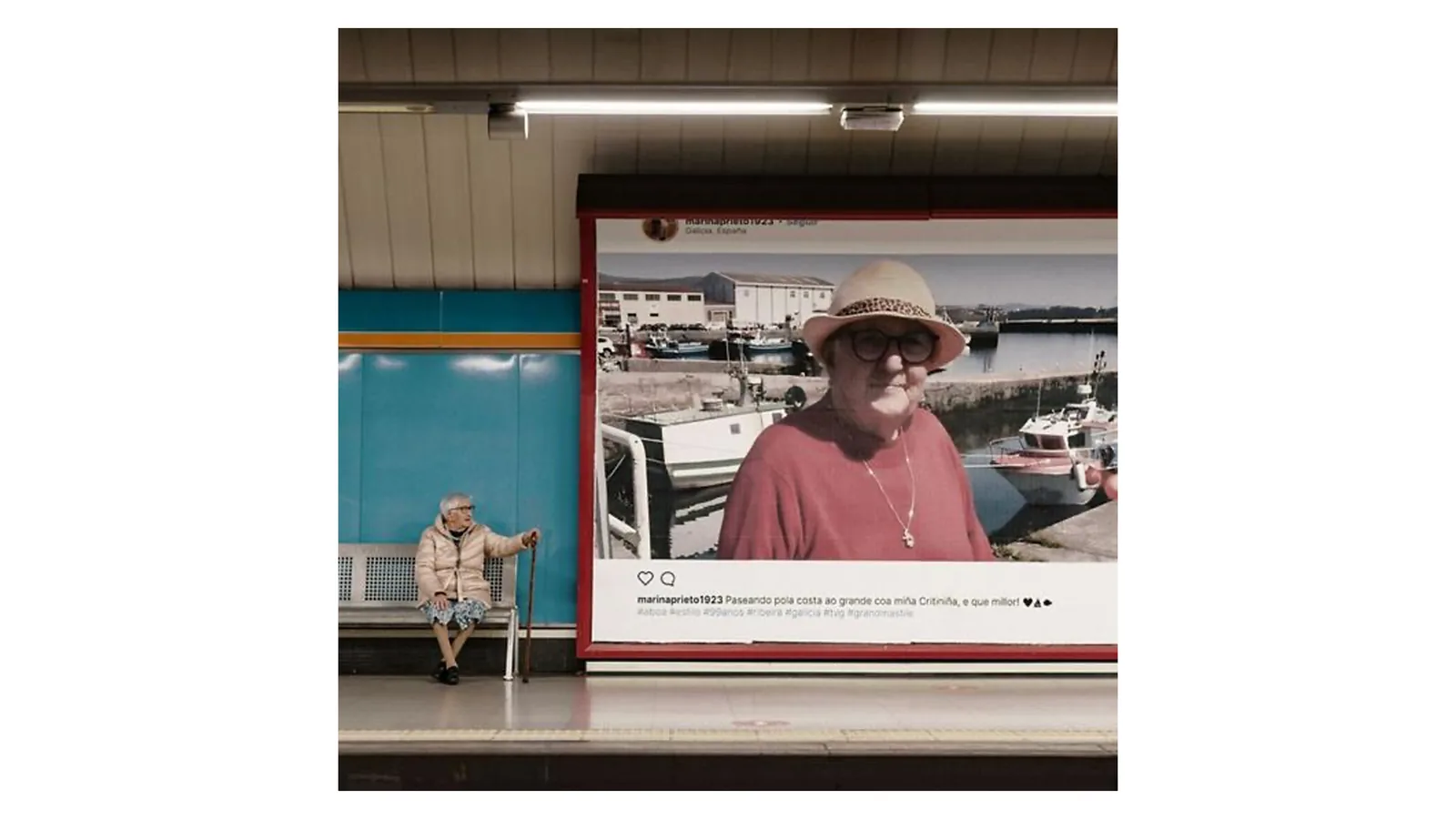
The campaign quickly grew Marina’s Instagram following to more than ten thousand, and sparked wide discussion on social media and in local press.
This is especially worth noting: an ordinary account that almost no one followed reached a completely different scale simply because a creative team discovered it.
The advertising didn’t create a life for Marina. It let more people see the life she already had.
Oreo: when the Super Bowl suddenly went dark
During the 2013 Super Bowl, the stadium suddenly lost power and the game was halted for about 34 minutes.
For the event, it was an accident. For viewers watching at the time, it was a sudden talking point.
Oreo’s brand team and its agency 360i were running real-time social media together at the time. After the blackout, the team seized the moment and posted an image of an Oreo in the dark with the line:
“Power out? No problem. You can still dunk in the dark.”
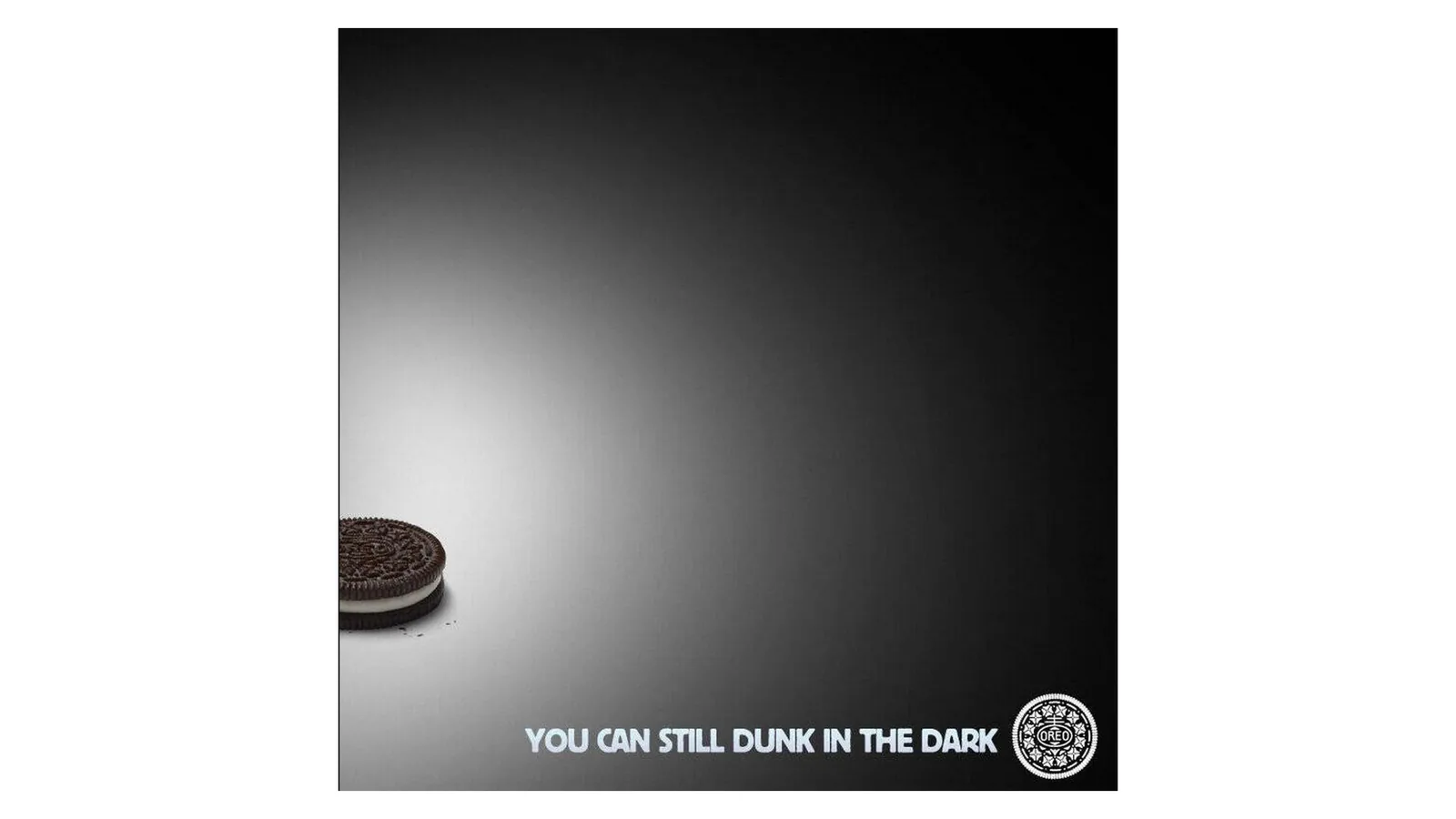
The post went viral and became a classic case of real-time marketing: when an unexpected event happened, the team caught the connection between the brand and the event in time.
It also shows that some creative opportunities aren’t in the original plan. The real world hands them over without warning.
Coincidence provided the opportunity, and the opportunity became an idea.
03. AI can find information, but creativity can’t just be finding information
Hand the cases above to today’s AI, and they aren’t hard to analyze.
Give it the shop owner’s video and it can distill the relationship between the brand and a neighboring business; give it Marina’s Instagram and it can recognize the communication value of an ordinary person’s real life; give it news of the Super Bowl blackout and it can quickly propose an Oreo-style real-time idea.
AI can even proactively search social media, monitor trending topics and track news to find similar potential leads.
So simply saying “AI can’t discover life’s coincidences” isn’t rigorous.
AI can find connections between pieces of information, and it can recognize the communication value of unexpected events.
But these cases still reveal a difference worth paying attention to:
Information being found doesn’t mean the story will be seen.
A video of a shop owner can be treated as just another joke, or as a story worth learning more about.
A centenarian’s Instagram can be just a personal account with very few followers, or the starting point of a city-wide campaign.
The same piece of information may be seen by countless people, but not everyone stops to find out more.
The key isn’t just information retrieval, but how people connect with reality.
In the Luckin case, the planner wasn’t given a task to find a sesame-cake shop. He simply came across an interesting story in his everyday feed, and decided to take one more step.
That one step is what gave an ordinary slice of life the chance to become a brand idea.
Of course, AI can also be designed to follow leads, arrange research and even take part in gathering information offline. In the future, these abilities may not need to be done by people at all.
But that doesn’t mean chance will disappear from life.
Life doesn’t run according to a brand’s marketing goals, and it doesn’t neatly package every interesting thing into a brief.
Every day, it produces countless relationships and stories that are unplanned and undefined.
And what creatives need to keep may be exactly this openness and curiosity toward the unknown.
04. In the age of AI, what do creatives need to look for again?
As AI takes on more and more research, analysis and creative production, a creative’s value perhaps shouldn’t rest only on “coming up with ideas better than AI”.
Because ideas themselves are becoming easier and easier to generate.
What’s really worth attention is how creatives stay connected with the real world and with life,
how they discover new leads outside the assigned task, and how they judge which seemingly trivial things are worth exploring further.
Luckin Big Sesame Cake reminds us that the sources of creativity go far beyond briefs, data and analysis reports.
They may also come from an idle scroll, a conversation on the street, an unremarkable little shop, or a person who had nothing to do with the brand.
As AI gets ever better at finding answers to set goals, creatives may need, more than ever, to keep their curiosity about the unknown.
Because some stories worth telling don’t even have a clear question before they’re discovered.
Future creative competition may not only be about who can generate answers faster, but also about who can encounter earlier the things that haven’t yet become problems, haven’t yet become insights, and haven’t yet been noticed by anyone.
After all, some ideas aren’t thought up.
They are “coincidences” delivered by life.